
Wood Guy
Yso CorpArcade
4.6535.00 Reviews
- Version
- 0.6.6
- Installs
- 5.00M
- Age Rating
- Everyone
Screenshots
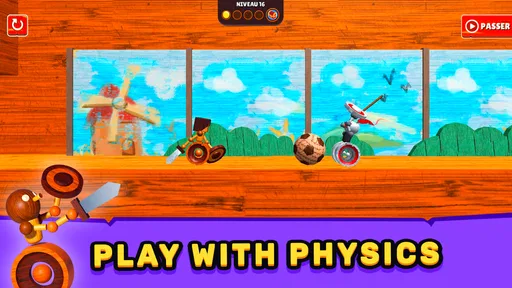


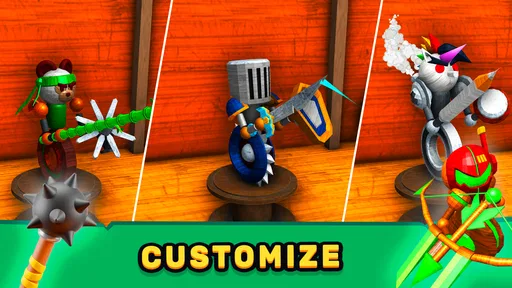

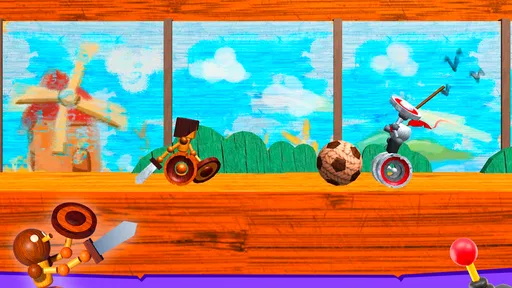
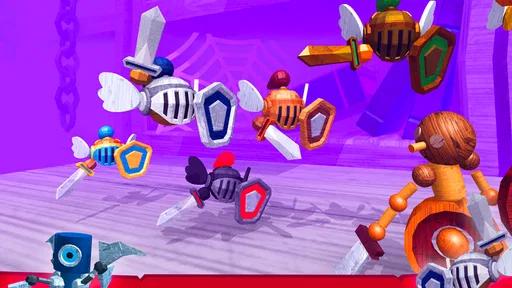

Our Review of Wood Guy
 Analysis by Appyee
Wood Guy is the kind of arcade game I open when I want something immediate rather than a long session with rules to study. Its central idea is simple: I shape a wooden warrior and guide that character through short, tactile challenges. That simplicity makes it easy to understand within moments, but it also means the game depends heavily on whether its actions feel responsive and whether the progression gives me enough reason to continue.
After spending time with it, my impression is that Wood Guy works best as a quick, low-commitment mobile game. I can pick it up for a few spare minutes, make progress without preparing a complicated strategy, and put it down without losing the thread. It is not trying to replace a deep action game or a large role-playing adventure. Instead, it focuses on a lightweight arcade loop built around the appeal of creating and improving a wooden fighter.
How Wood Guy feels during short and longer sessions
The first thing I notice is how quickly the game communicates its purpose. There is no need to learn a long list of controls before I can begin. That matters on a phone, where a game often competes with messages, travel, waiting rooms, and other interruptions. Wood Guy feels designed for those moments when I want to start playing immediately and decide later whether the session deserves more time.
In a short session, the game’s main strength is its low mental overhead. I do not need to remember a complicated story or manage a large collection of systems before making a useful decision. The wooden-warrior concept gives the experience a clear visual identity, while the arcade format keeps the focus on what is happening in front of me rather than on extended preparation.
That speed of entry is also the main trade-off. Players who enjoy detailed character builds, elaborate maps, or carefully layered combat may find the experience too direct. The game gives me a quick activity, not a broad world to investigate. I would recommend it to someone who prefers simple interaction and visible movement over a slower game that asks for regular planning.
For an everyday example, I can imagine playing it while waiting for a coffee or during a short break between tasks. A few attempts fit naturally into that situation because I do not have to reserve a large block of time. If I am commuting and expect interruptions, this kind of straightforward arcade design is more convenient than a game that punishes me for leaving at the wrong moment or demands constant attention to a long sequence of events.
What makes the wooden-warrior idea work
The wooden character is more than a decorative theme. It gives the game a playful, handmade feeling that separates it from the many arcade titles built around anonymous shapes, cars, or standard fantasy fighters. I like that the concept is immediately readable: the character is something I am shaping and using, so the visual idea connects naturally with the action.
My most useful approach is to treat each attempt as a small experiment rather than trying to play perfectly from the beginning. I pay attention to how the character responds, identify which actions feel safest, and then repeat the parts that produce reliable progress. This is especially helpful for new players because the game’s simplicity can otherwise encourage rushed decisions. A calm rhythm usually gives me more control than constant tapping.
Another practical tip is to avoid judging the whole experience from the opening moments alone. Arcade games can feel almost too basic at first because their appeal depends on repetition and gradual familiarity. After several attempts, I become more aware of timing, positioning, and when to commit to an action. That does not turn Wood Guy into a complex simulator, but it does give the simple premise more texture.
Speed, responsiveness, and the cost of repetition
Wood Guy feels most comfortable when I want a fast start and a clear objective. The game does not ask me to spend a long time navigating before I reach the playable part. That makes it suitable for casual use and for players who dislike menus that stand between them and the action.
However, the perceived speed of an arcade game is not only about loading or starting a round. It is also about how quickly I understand the result of an input. When the connection between what I do and what the wooden warrior does feels clear, even a simple challenge can become satisfying. When an attempt goes wrong, I want to understand whether I made a poor choice or simply reacted too late. That distinction affects whether I feel motivated to try again.
Repetition is therefore both the game’s engine and its main risk. Repeating a challenge can be enjoyable when I am refining my timing or trying to improve a previous result. It becomes less appealing when the same actions stop teaching me anything new. I would not choose this game as my main mobile title if I needed constant variety, but I find the repeatable arcade format useful when I want a predictable distraction.
The free entry point helps here. I can test the basic experience without paying first, which makes it easier to decide whether the loop suits me. There are in-app purchases ranging from under a dollar to just over one hundred dollars per item, so I would approach optional spending carefully. My advice is to play long enough to understand whether the core repetition is enjoyable before considering any purchase. A payment cannot fix a gameplay style that simply is not a match for you.
How it behaves when I play heavily
Short sessions are where Wood Guy makes the strongest case for itself, but heavier use reveals more about its limits. If I keep playing for a longer stretch, the simple structure becomes more noticeable. The same basic appeal that makes the game approachable can also make it feel narrower over time, especially for someone who expects a steady stream of new mechanics.
During extended play, I find it useful to divide the experience into small goals. Instead of treating every attempt as a demand to reach an ideal result, I focus on one improvement at a time: learning a movement pattern, reducing careless mistakes, or becoming more consistent with the warrior. This turns repetition into practice rather than empty looping.
That approach also helps with attention. Because the game is in the arcade category, I am more likely to play quickly and react instinctively. When I rush for too long, mistakes become harder to diagnose. Taking a brief pause between attempts lets me decide what actually went wrong. It is a small habit, but it makes the game feel less random and gives each retry a purpose.
For players who use mobile games as a daily routine, the important question is whether the basic loop remains pleasant after the novelty of the wooden character fades. In my view, the answer depends on your expectations. If you enjoy improving through repeated attempts, Wood Guy can remain a comfortable pick. If you need a large amount of content or a constantly changing challenge, you may reach its limits sooner than expected.
Stability and recovery after interruptions
Reliability matters more in a casual game than many people realize. I may open Wood Guy in a situation where I expect to be interrupted, so I value a design that lets me return without feeling that a brief pause has ruined the whole experience. The game’s straightforward arcade identity makes it easier to resume mentally because I do not have to reconstruct a complicated plot or remember a long chain of objectives.
My practical recommendation is to treat each attempt as a self-contained piece of play whenever possible. That mindset reduces frustration if a notification, phone call, or change of location breaks the session. I also prefer to finish an active moment before switching away from the game rather than leaving it during a demanding action. This is not a special feature claim; it is simply the safest way to use any quick arcade title when the phone may become busy.
Recovery is also connected to motivation. If restarting feels quick and understandable, a failed attempt is easier to accept. If I have to repeat a long setup every time, failure feels more expensive. Wood Guy benefits from its compact style here because the game is easier to approach as a series of attempts than as one continuous commitment.
Still, I would not describe it as a perfect choice for every interruption-heavy situation. Anyone who needs guaranteed progress preservation, detailed pause behavior, or a very forgiving structure should test it personally on their device before relying on it during travel or a busy workday. My experience suggests that its simple format is convenient, but convenience is not the same as a promise that every interruption will be handled exactly as a player wants.
Device requirements and resource expectations
The game supports Android devices running version 8.0 or later, which gives it a reasonably broad starting point among older phones and tablets. That is useful for players who do not own a recent flagship and simply want a small arcade title for occasional use. The age rating is Everyone, so the presentation is positioned for a broad audience rather than a narrowly mature one.
Even with a compatible operating system, device age can affect the overall experience. Older hardware may have less room for other active apps, and a phone under pressure from many background tasks can feel less comfortable for any game. I would close unnecessary apps before a longer session on an older device, not because Wood Guy is confirmed to be demanding, but because reducing background strain is a sensible way to improve consistency.
Storage planning is another everyday consideration. The game has passed five million installs, so it is clearly being used widely, but popularity does not tell me how much space it will occupy on a particular device or how it will behave alongside other apps. If my phone is nearly full, I would make room before installing any new game and avoid assuming that a casual presentation automatically means negligible resource use.
Battery expectations should be similarly practical. Arcade play can keep the screen active and require repeated interaction, so a longer session will naturally be more noticeable than checking a message. I would use Wood Guy comfortably for short breaks, while I would avoid starting a long play session when my battery is already low. That is a reasonable trade-off for most mobile games, but it is worth remembering if you plan to use it away from a charger.
Where it stands beside other arcade choices
Compared with puzzle games, Wood Guy asks for more immediate physical response and less quiet calculation. A puzzle title may let me stop and think through a board, while this game suits moments when I want movement and quick decisions. Compared with endless runners, its wooden-warrior identity gives it a more character-focused feel, even though both styles can appeal to players who enjoy repeated attempts.
It also differs from larger action games that build their appeal around equipment, story, or extensive exploration. Those alternatives are better when I want a longer-term project and a sense of discovering a broad system. Wood Guy is better when I want something I can understand quickly and revisit without studying a manual. The choice is not about which format is universally superior; it is about whether I want depth through complexity or satisfaction through a compact loop.
I would skip it if my main reason for playing mobile games is social competition, rich narrative, or detailed customization. I would also be cautious if I dislike repeating similar actions, because the arcade structure depends on trying again and learning through repetition. On the other hand, players who enjoy approachable action, quick restarts, and a playful visual theme are more likely to appreciate what it is doing.
The developer, Yso Corp, has placed the game in a space where accessibility matters more than elaborate explanation. That makes it easy to recommend to a friend who wants a free game to sample, but I would still explain the trade-off honestly: the lack of an upfront price lowers the barrier to entry, while the optional purchase range means I would keep spending under control and decide based on actual enjoyment rather than impulse.
What the public response suggests
The game holds an average rating of 4.6 from around thirteen thousand ratings, with roughly five hundred written reviews. I read that as a sign that many players find the central idea appealing, although an average cannot tell me whether their priorities match mine. A strong score is encouraging for someone looking for a casual arcade game, but it should not be treated as proof that every player will enjoy the same level of repetition or simplicity.
Its reach is also notable, with more than five million installs. That makes it easier to see Wood Guy as an established casual choice rather than an obscure experiment. Still, install volume and personal fit are different things. I would use the popularity as a reason to give it a fair trial, not as a substitute for deciding whether its pace and structure suit my habits.
The current version is 0.6.6, and the game was released on May 30, 2023. Those details are useful context when considering how the title may fit into a longer-term routine: I would keep the app updated through the normal store process and check that my device remains compatible before expecting a completely unchanged experience over time.
My performance verdict for everyday players
My final view is that Wood Guy succeeds when I use it for what it is: a free arcade game built around the quick appeal of a wooden warrior and repeatable action. It starts quickly, is easy to understand, and fits naturally into short breaks. On a compatible device, I would expect it to be a practical casual download rather than a title that demands a high-end phone or a large time commitment.
The main limitation is not a flaw I can overlook; it is the natural boundary of the design. Players who need deep progression, extensive variety, or a story-driven reason to return may find the experience too compact. Longer sessions can make the repetition more obvious, and optional purchases deserve restraint because the listed price range stretches from $0.99 to $104.99 per item.
I would recommend it to a friend who wants a simple arcade distraction, enjoys improving through retries, and likes the playful idea of crafting a wooden fighter. I would not recommend it as the first choice for someone seeking a large action adventure, a thoughtful puzzle game, or a social multiplayer experience. Its best quality is its immediacy, while its biggest weakness is that immediacy may not provide enough variety for extended play.
For me, that balance makes Wood Guy worth trying, especially because the initial download is free and the age rating is Everyone. I would begin with short sessions, learn the rhythm instead of rushing, and avoid spending until the core loop has proved that it belongs on my phone. Used that way, it is an approachable arcade option with a distinct wooden character and a clear place in a casual gaming routine.
Verdict
Strengths of Wood Guy
- Simple controls make the game easy to pick up.
- Short levels are suitable for quick gaming sessions.
- Wood-themed visuals give the game a distinctive style.
- Offline play makes it useful when no internet is available.
- Gradual challenges can help keep casual players engaged.
Limitations of Wood Guy
- Gameplay may become repetitive after extended play.
- Some levels can feel more frustrating than rewarding.
- Ads may interrupt the experience between attempts.
- Limited customization reduces long-term personalization.
- The game may offer little appeal to players seeking deep strategy.
Other Releases by Yso Corp
View All
Ninja Hands
Action4.5
Similar Picks in This Category
View All
Subway Surfers
SYBO Games4.6

Stickman Party 234 MiniGames
PlayMax Game Studio4.6

Subway Princess Runner
Ivy4.4

Temple Run
Imangi Studios4.2

Zombie Tsunami
Mobigame SAS4.6

Stack Ball - Crash Platforms
CASUAL AZUR GAMES4.5
Frequently Asked Questions
What is Wood Guy, and how does the game work?
Wood Guy is a casual puzzle game centered on arranging, matching, or managing wooden pieces through short interactive levels. Its simple controls make it easy to start, while progressively harder challenges require more careful planning and timing. The game is designed for quick sessions, so it can be suitable for playing during a break, although the exact objectives may vary between levels or game modes.
Is Wood Guy free to download and play?
Wood Guy can generally be downloaded without an upfront purchase, but availability of optional in-app purchases may depend on the version installed and the platform you use. These purchases can sometimes include cosmetic items, extra resources, hints, or other conveniences. Before downloading, it is worth checking the store listing for current pricing, advertising details, and whether purchases are protected by your device’s parental controls.
Does Wood Guy require an internet connection?
Wood Guy may allow some gameplay without a constant internet connection, which is convenient for travel or areas with limited service. However, features such as advertisements, progress synchronization, updates, leaderboards, special events, or in-app purchases may require connectivity. Because offline support can change after updates, players should check the official store description and test the game before relying on it without mobile data or Wi-Fi.
Is Wood Guy suitable for children and younger players?
Wood Guy uses a straightforward concept and generally accessible gameplay, which may make it appropriate for a broad audience. Nevertheless, parents should review the age rating, advertising behavior, privacy information, and available in-app purchases before allowing children to play. If the game includes external links, account features, or purchase options, enabling parental controls is recommended to prevent accidental spending or access to unsuitable content.
What should I check before installing Wood Guy on Android or iPhone?
Before installing Wood Guy, check that your device meets the required operating-system version and has enough free storage for the download and future updates. It is also useful to review recent user feedback, developer information, permissions, privacy practices, and whether the game contains ads or optional purchases. Downloading only from Google Play or the App Store helps reduce security risks and ensures you receive official updates.
Play our best games!


